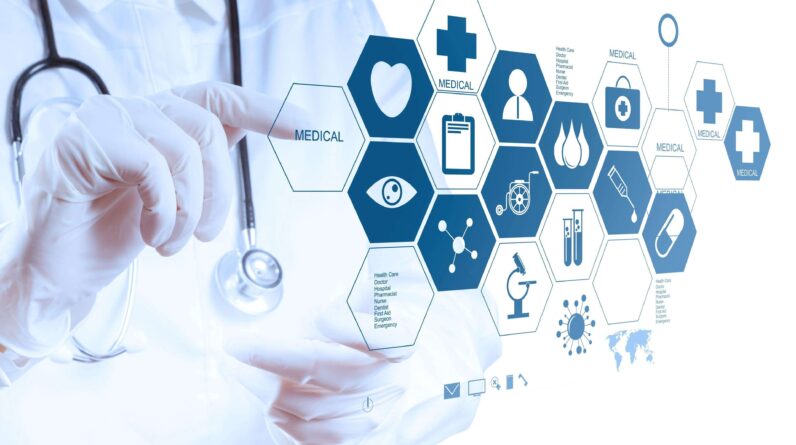
In today’s digital era, AI and blockchain in healthcare are emerging as groundbreaking technologies that have the potential to revolutionize patient care, medical data management, and digital health security. Healthcare organizations worldwide are seeking ways to provide better services, secure sensitive data, and enhance patient outcomes. By combining artificial intelligence (AI) with blockchain technology, the industry is entering a new phase of innovation and transformation.
One of the biggest challenges in the healthcare sector is data security and privacy. Patient records often contain sensitive personal information, making them attractive targets for cybercriminals. Blockchain offers a decentralized and tamper-proof system for storing medical data, ensuring HIPAA compliance, GDPR compliance, and enhanced cybersecurity. When combined with AI, this framework not only secures information but also makes data more accessible for accurate diagnoses and treatment.
AI in healthcare has already shown great potential in predictive analytics, medical imaging, personalized treatment, and drug discovery. When integrated with blockchain, AI systems gain access to reliable, verified, and secure medical records. This synergy enables physicians to make faster and more accurate decisions, ultimately leading to improved patient outcomes and reduced healthcare costs.
Another crucial aspect is interoperability in electronic health records (EHRs). Traditionally, healthcare data has been fragmented across hospitals, clinics, and insurance providers. Blockchain solves this issue by creating a unified, decentralized ledger where patient records can be securely shared across different platforms. AI algorithms can then process this data to identify patterns, detect diseases earlier, and suggest personalized care plans.
In addition to enhancing patient care, blockchain and AI reduce administrative inefficiencies in the healthcare sector. Billing fraud, duplicate testing, and insurance claim issues are common problems faced by hospitals and patients. Blockchain-based smart contracts ensure transparent and automated claim settlements, while AI verifies the authenticity of medical bills, reducing fraud and increasing trust in the system.
Telemedicine and remote healthcare are also growing rapidly in 2025. With the rise of wearable devices and IoT-enabled health trackers, AI can analyze real-time patient data to predict health risks. Blockchain ensures that this information is securely stored and shared only with authorized medical professionals. This combination not only empowers patients but also enables doctors to provide continuous care and remote monitoring.
The pharmaceutical industry also benefits greatly from the integration of AI and blockchain. Drug counterfeiting remains a global issue, costing billions annually. Blockchain enables transparent tracking of drugs from manufacturers to end consumers, ensuring authenticity. AI further enhances this process by analyzing supply chain data to prevent disruptions and predict future demands.
Another promising application lies in clinical trials and medical research. Blockchain provides transparency and prevents data manipulation, while AI accelerates trial outcomes by analyzing large datasets more effectively. This ensures that new treatments and vaccines reach patients faster while maintaining trust and compliance in the research process.
As governments and healthcare providers worldwide adopt AI-driven blockchain solutions, the healthcare ecosystem will become more secure, cost-effective, and patient-centric. Investments in digital health technologies, AI healthcare startups, and blockchain-based solutions are rapidly growing, signaling a future where patient empowerment, transparency, and data security are at the core of medical innovation.
In conclusion, the integration of AI and blockchain in healthcare is not just a technological advancement but a paradigm shift in patient care and medical data management. From securing patient records to improving diagnostics, enabling remote healthcare, and preventing fraud, these technologies hold the key to the future of medicine. As adoption increases, healthcare systems will become smarter, safer, and more efficient, paving the way for better health outcomes globally.